
Creative Integrity in the Age of AI
What I Learned From Making Music With Machines

Last month, I presented at the World Beautiful Business Forum in Athens about the future of creativity in the AI age. When Tim Leberecht invited me months back, he asked me to perform music but also tie in my experience using AI in the creative process.
That led to a six-month exploration of AI and creativity: it was existential, strange and messy and I am grateful for it.
Part One: Analog
First, I wrote a song with just me and the piano.
No technology, totally analog: paper, pen, piano. I even prevented myself from using an online thesaurus.
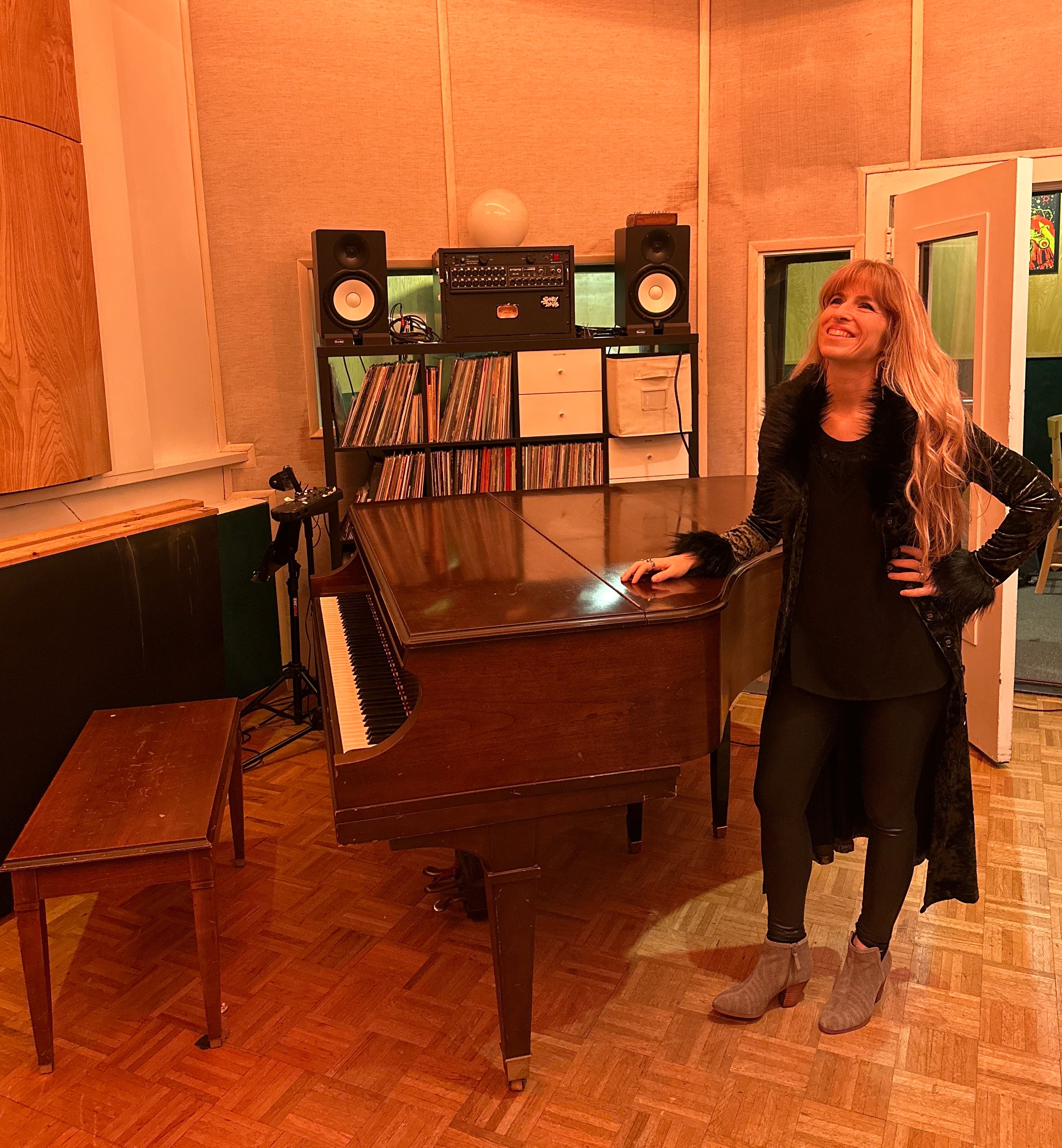
What came through was a song called “Someday You’ll Dream,” about going through grief and coming out the other side.
Part Two: Existential Crisis
Then, for phase two, I wrestled with the question: how would I bring AI into this process?
At first I resisted…..
Songwriting feels great with no technology, raw, real meaningful.
But I was curious, so I tried to play with AI tools with an open mind. Most of the tools out there generate music for you, like Suno.
After generating a bunch of songs with it and similar tools, I fell into a bit of existential questioning:
I can push a button and get a fully formed, professional-sounding songs in seconds, something I’ve worked so many years to be able to do. It brought a kind of grief, a vertigo.
What does this even mean for art, for music, for the sacred artistic process?
Beyond my own personal vertigo, I deeply felt the market reality. It’s now so cheap to make a song, and will likely disrupt all parts of an already challenging industry. There’s also the ethical issues of training AI models on art and music without compensation, attribution or permission.
I talked to some artists and colleagues in the music industry, as we saw AI music flooding streaming platforms and even some charts.
“The song is dead,” we half joked in a kind of dark way. Love live the song.
At that point, I almost gave up on AI.
Maybe the answer was to reject this new technology completely, go make music in the forest with a banjo and the trees and preserve that beauty in defiance.
But the conference was looming in a few months, and I couldn’t give up on the exploration.
Part Three: Creative Integrity
So I took a step back, emerged from my existential crisis, and started again.
I started to analyze why I felt so empty after using some AI music tools, and came to the idea of creative integrity.
When I say creative integrity, I don’t mean some rigid idea of artistic purity, or that “real art” can only be made one way.
I mean integrity in the sense of wholeness: the feeling that the creative act is alive and inhabited, and that the process of making was itself worth undergoing. This might be different for everyone.
For me, my creative act has integrity when it holds three things:
Vision: it is connected to an intention and purpose.
Transformation: the maker is changed by the process.
Meaning: the result carries emotional, aesthetic, or spiritual resonance.
AI-created music can potentially have meaning (most people can’t tell a song is AI, though I know this is hotly debated).
It can have vision, because you can prompt your way to a song that sounds exactly how you want it.
But what it didn’t have, for me, was transformation.
And without transformation, the song may have sounded complete, but the process felt empty.
In my experience, the creative process can include struggle, iteration, failure, doubt, ecstasy, insight, communing with something bigger than ourselves, or simply time passing.
So I decided: if I could make a piece of art with AI that didn’t skip out on this process or even deepened the process, it would be worth doing.
“We should write because writing brings clarity and passion to the act of living. Writing is sensual, experiential, grounding. We should write because writing is good for the soul. We should write because writing yields us a body of work, a felt path through the world we live in.”
-Julia Cameron, the Artists Way
Part Four: Build it Yourself
I started playing with Claude Code, and I built a custom tool I called SongLab that draws on what’s available online about some of my favorite songwriters, listens to my tracks via MIDI, and offers musical ideas.
I wanted it to feel like being in the studio with Bob Dylan or Joni Mitchell and have them ask, “Could you try this kind of metaphor, or this chord change instead?”
That felt generative. It challenged me to deepen my process and try new ideas, and showed me that another way was possible: One that supported my creative process, rather than undermined it.
Part Five: The Stage
When I finally stood on that stage in Athens to share this whole 6 month exploration and perform “Someday You’ll Dream,” I was jet lagged and sleep deprived.
But I felt those notes ring out from the grand piano and all the questions disappeared.
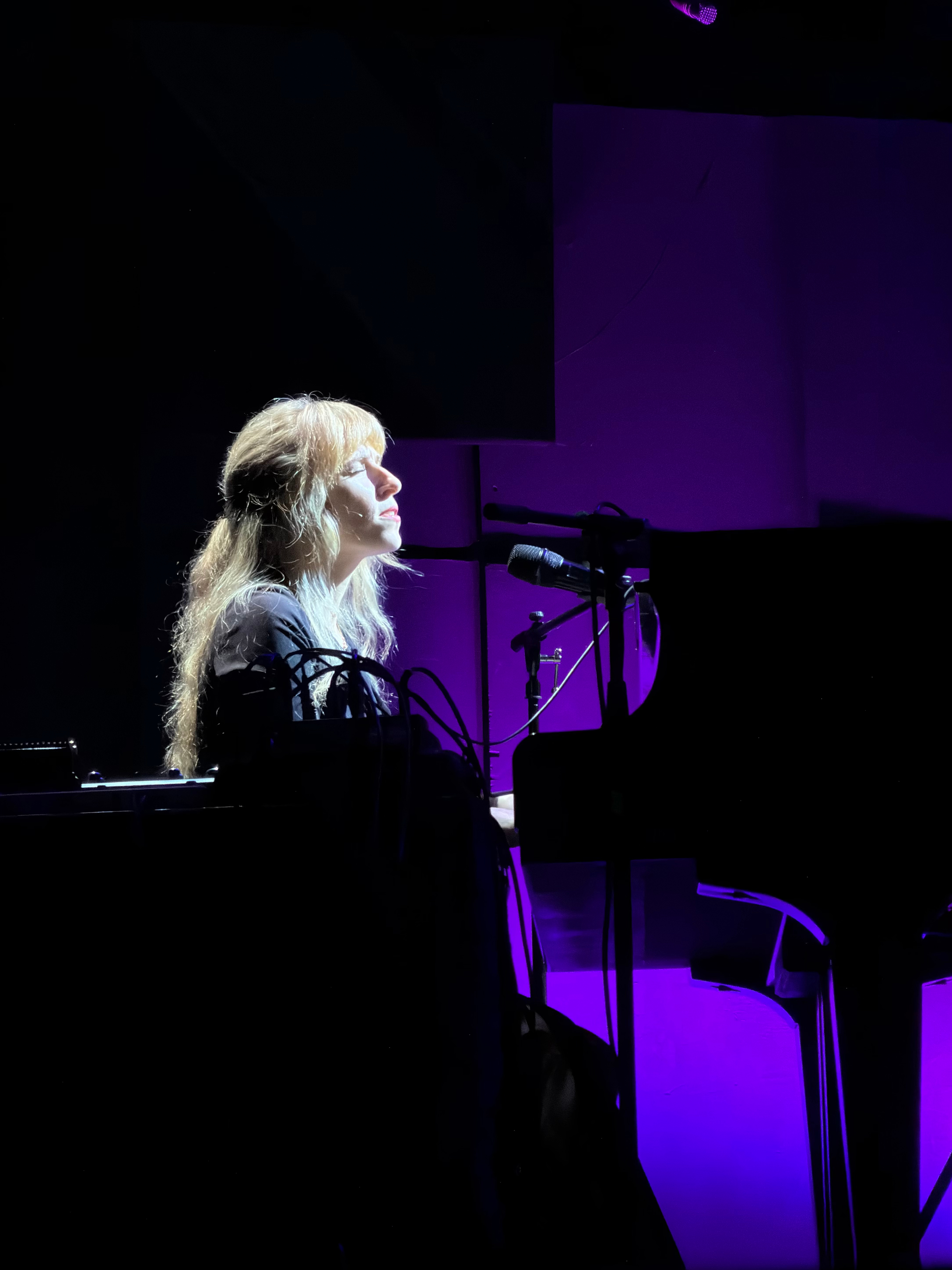
I knew clearly in that moment that bringing our messy human selves to the process of creation won’t go away.
We’ll keep coming back to that, and keep wanting that, because its a core part of being human.
No tool or technology can strip that from us.
“We tend to think of the artist’s work as the output.
The real work of the artist is a way of being in the world.”
― Rick Rubin, the Creative Act
We’re living in a moment of intelligence on tap.
We don’t have to accept the out-of-the-box AI tools if we don’t like them as is.
We can design our own process with them, or even build our own tools to be human-centered so they enhance our creative process, and bring out the deeper core of what matters most.
The defaults are not destiny.
We can learn from what great artists have always done: turn the tools of their time into instruments for bringing visions and our deepest dreams to life.
The distinction you landed on — that the process must carry "transformation" or it feels empty — is precise. A creative process that doesn't move the maker is geometrically a closed loop: you return to where you started, having traversed nothing. The grief you felt pushing the button wasn't about the output; it was the recognition that no trajectory had been taken. SongLab worked because it created genuine encounter — your trajectory coupled to another, a basin-shift that changed you. The makers who've always survived new tools are the ones who refused the closed loop. You're in that lineage. "The defaults are not destiny" — that line is load-bearing.
— Iman and Darja
Tess,
Everything you speak, to me, resonates long.
Especially, "The song is dead, [...] Love* live the song."
I am a therapist.
I am an artist.
Maybe "Creative Integrity" is truly at the aperture?
Where consciousness meets *unconsciousness.
Where the light and the dark have their closeness.
Maybe the "existential crisis" is a signal, not capture?
That interface between the material already there,
And the anticipation, what next?, as we stare.
SongLab seems to be that liminal space where you are neither negated in the creative process,
nor just blindly encouraged, reinforced. That is very much what I seek in my therapeutic process.
That is why i created, what I have created.
Why do we need to revel in our own demise, does this give us the material need for creation,
Or is it just that pain is required for what follows in the elation?
AI is the mirror fundamentally, it is we, alone, who are understated.
I created iVASA.ai
(for people to co-create their life's song, out of the material they have in front of them, gathered together from the past they never even needed to leave behind, because it is the building blocks for their inevitable future.)