
Reflecting on AI and Creativity
8 things I am sitting with an artist in the age of AI

“I thought my body would know.”
Someone said this to me over the weekend at the Artificiality Summit, after I presented my song alongside an AI-generated version and asked the audience to guess which one was mine.
Most people got it right.
But many guessed the AI version…
and some even got chills.
As I leave this weekend after three days of incredible conversations, amazing humans, and deep gratitude, I’m reflecting and sitting with it all.
I proposed a new model for how artists can use AI: not as a replacement, but with a “conscious integration,” a way to amplify our human creativity.
From the synthesizer to the camera, from Photoshop to Plato’s resistance to writing itself, history shows us that every new artistic tool was once met with fear.
And yet, time and again, the new tools expanded what it means to create.
Perhaps AI will be the same…..
After all, both “art” and “artificial” come from the Latin root ars. Originally, “artificial” didn’t mean fake. It meant crafted, a thing made intentionally, with skill. Only later did it take on the sense of imitation or inauthenticity.
Most of AI’s current use in music and art is focused on replication or efficiency, finishing songs faster, sounding like someone else, imitating a vibe.
But there might be the “turntable moment,” where a tool originally built for one function (playback) was reimagined as an instrument, which births new musical and artistic worlds.
Yet with AI music and AI videos flooding the internet, it’s starting to get under our skin when we can’t tell what’s human made.
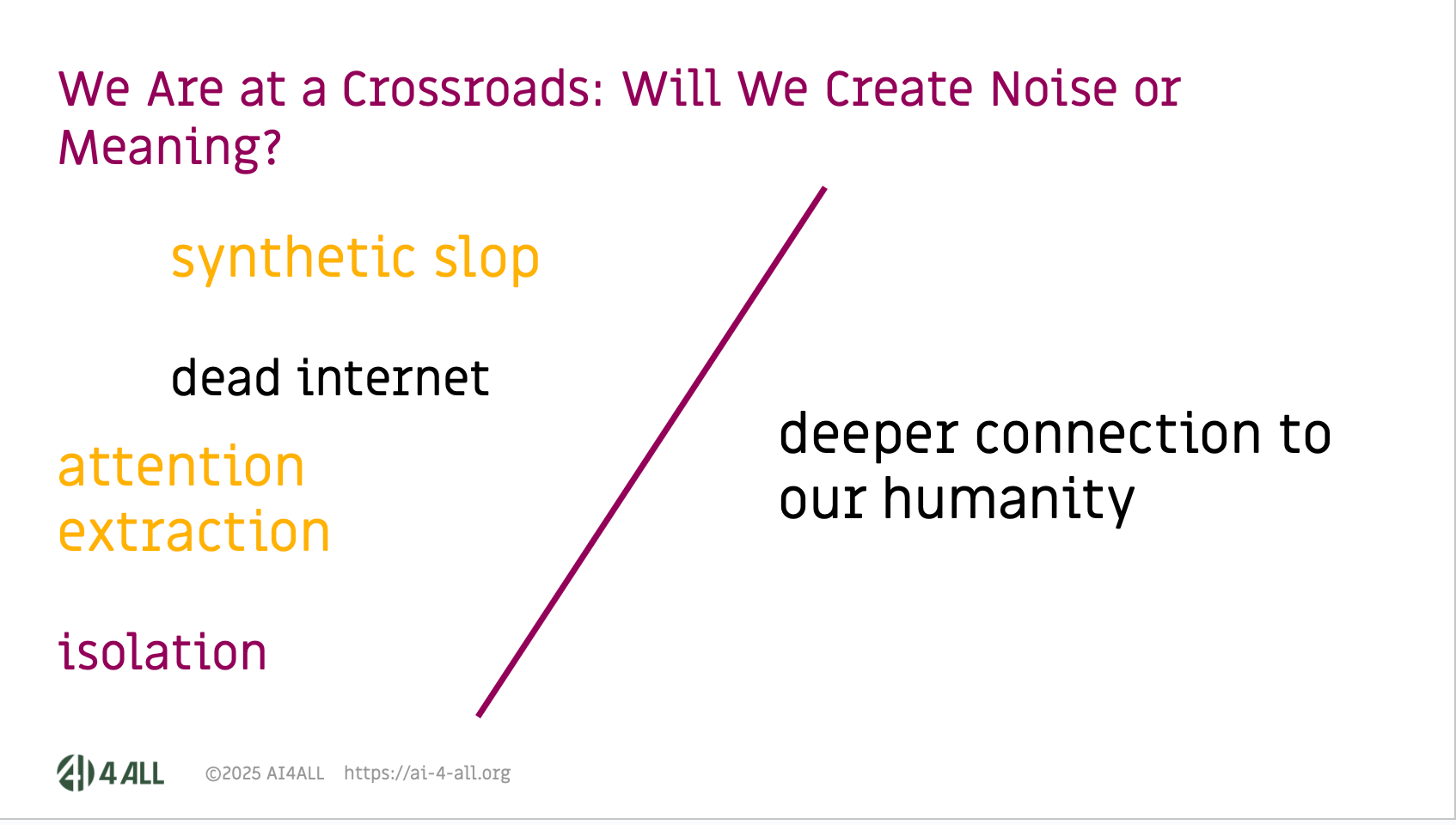
If we can’t tell anymore what’s human and what’s AI, and it moves us, does it matter?
It feels like it does.
We assume there’s something different in kind or in substance between something fully artificial and something human, and that it matters.
Here are 8 things I’m sitting with around the future of AI, creativity, and art:
Imperfections:
It’s often what isn’t perfect that shines in the art that matters. Think of Joni Mitchell playing the guitar with new tunings, or the singular texture of Bob Dylan’s voice. Pop music has evolved to become more compressed, quantized, tuned, its imperfections produced away. Maybe AI will push us toward new forms of rawness.
Pain:
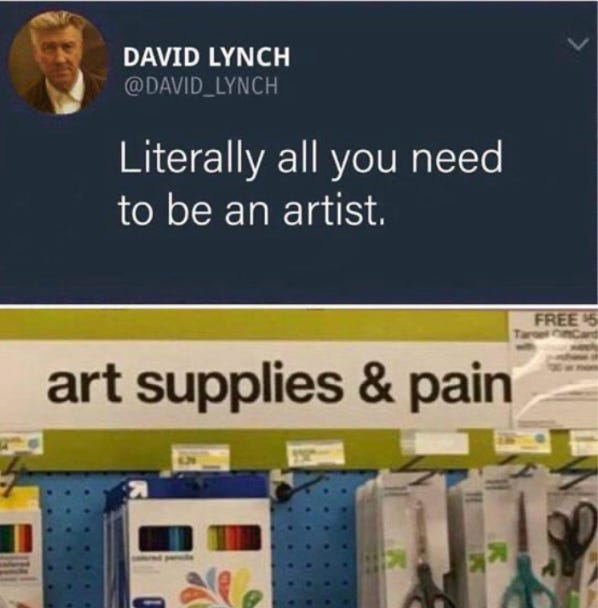
In the TV show Westworld, it was the machines’ ability to suffer that marked the beginning of their consciousness. Often, art emerges out of pain, or feelings so big we need to put them somewhere.
AI doesn’t feel yet, or struggle over the creative process. And yet, people seem to be projecting feelings onto AI generated songs, and the songs SEEM to represent emotions.
Death:
Our mortality shapes our creativity. We make art to wrestle with death, to grieve, to hold on, to leave a legacy. Without mortality, there’s no urgency to speak before it’s too late, no need to leave something behind. AI may create, but it doesn’t NEED to.
Embodiment:
AI moves fast. But the creative process also needs time to digest, like the body. MIT studies show that when people use ChatGPT, their brains often don’t absorb the “nutrients” of the writing or reading process. What happens when we skip the deep integration?
The Flow:
How does AI impact our ability to enter flow states? My experience is that AI moves faster than flow. I’d love to see research here.
Communion & Connection:
Human-made art often creates a bridge between the artist and the audience, a sense of communion. AI art, by contrast, can feel more like content designed for quick consumption, fast attention spans. Can it also bring us together?
Slowness:
Some of the most meaningful creative experiences emerge from slowness, struggle, meandering, mistakes. AI optimizes for speed and efficiency. What do we lose when we rush to the finish line?
Risk:
When humans make art, we risk something: vulnerability, rejection, misunderstanding. AI doesn’t risk. Does risk give art its emotional edge?
AI will change how we create. But it’s up to us to decide how we use this moment to become more connected, more human and enrich our lives.
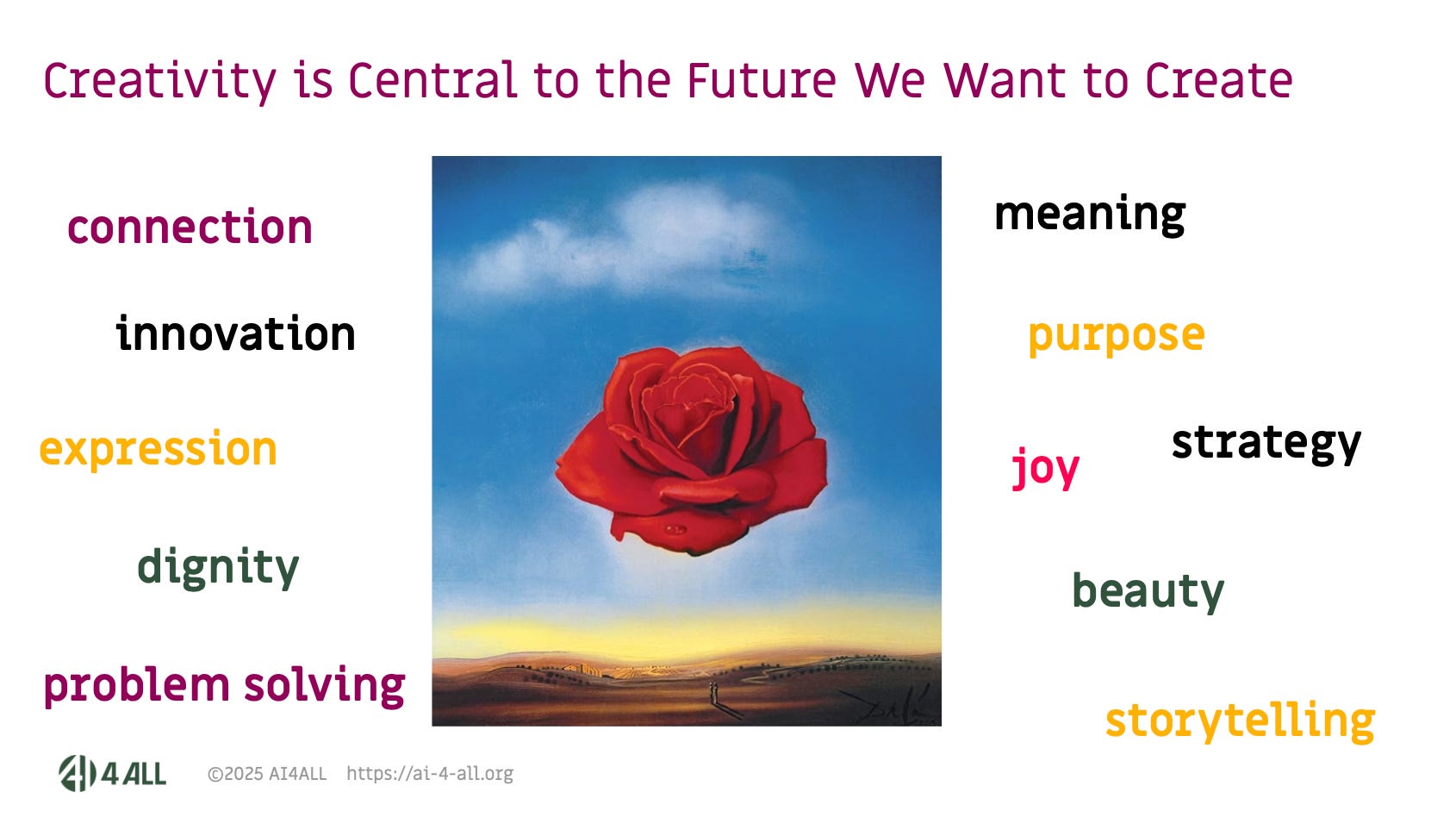
To remember that creativity isn’t just output, It’s the way we metabolize being human.
Would love to hear what others are noticing or sitting with.