
The Case for Lingering
On Berlin, third spaces, and what we're building for

In my first year of college, my grandfather died. He left me $500, and I used it to travel to Germany, my first trip to Europe (wow, $500 went far back then). It felt like the right way to honor him; he loved Germany and studied the language and literature.
My grandfather was a professor and author, and he died right as I entered college to study literature and philosophy. It felt unfair that I never got to share that world with him.
At 18, going to Germany was a way to try to understand and connect with him, as I knew the broad strokes of his story but not the details.
My generation grew up in a strange in-between: after families had begun losing many of their oral histories, but before everyday life was filmed and caught on phone cameras.
Many years later, as I am back in Berlin, I am thinking of him a lot.
I have no record of my grandfathers journeys here, or what drove him to study and visit here. But I like guessing if he was also struck by the same things I am.
Tiny cafés lit by candles burned halfway down inside glass lanterns.
People lingering over drinks for hours, smoking at sidewalk tables.
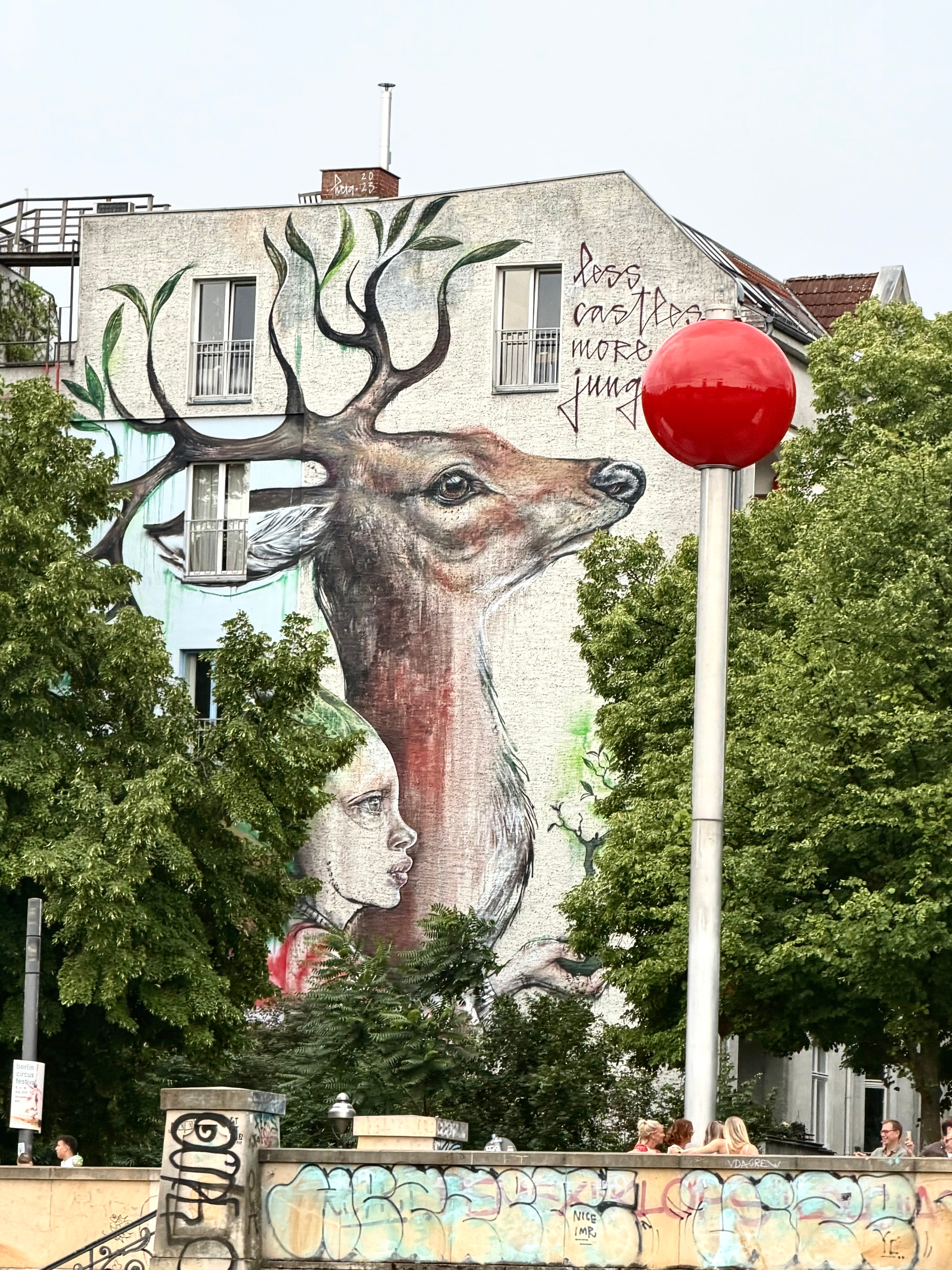
Groups gathering along the river as evening comes, sometimes turning into dance parties. Many clubs and bars where phones aren’t allowed at all, where people sometimes dance for 72 hours straight.
I hear from a few locals that intergenerational friendships are normal, where 60 year olds are friends with 20 year olds, and both still dance. A lot.
The pace is a stark contrast to San Francisco and New York where I’ve lived my adult life.
Here, there’s a sense of sinking into life, and I feel it in my nervous system.
Slowing down, I notice more, my senses are more engaged, there’s more space to feel, to think.
I spent hours on a boat filled mostly with German families, meandering down the river as they drank spritzes and laughed about things I couldn’t understand.
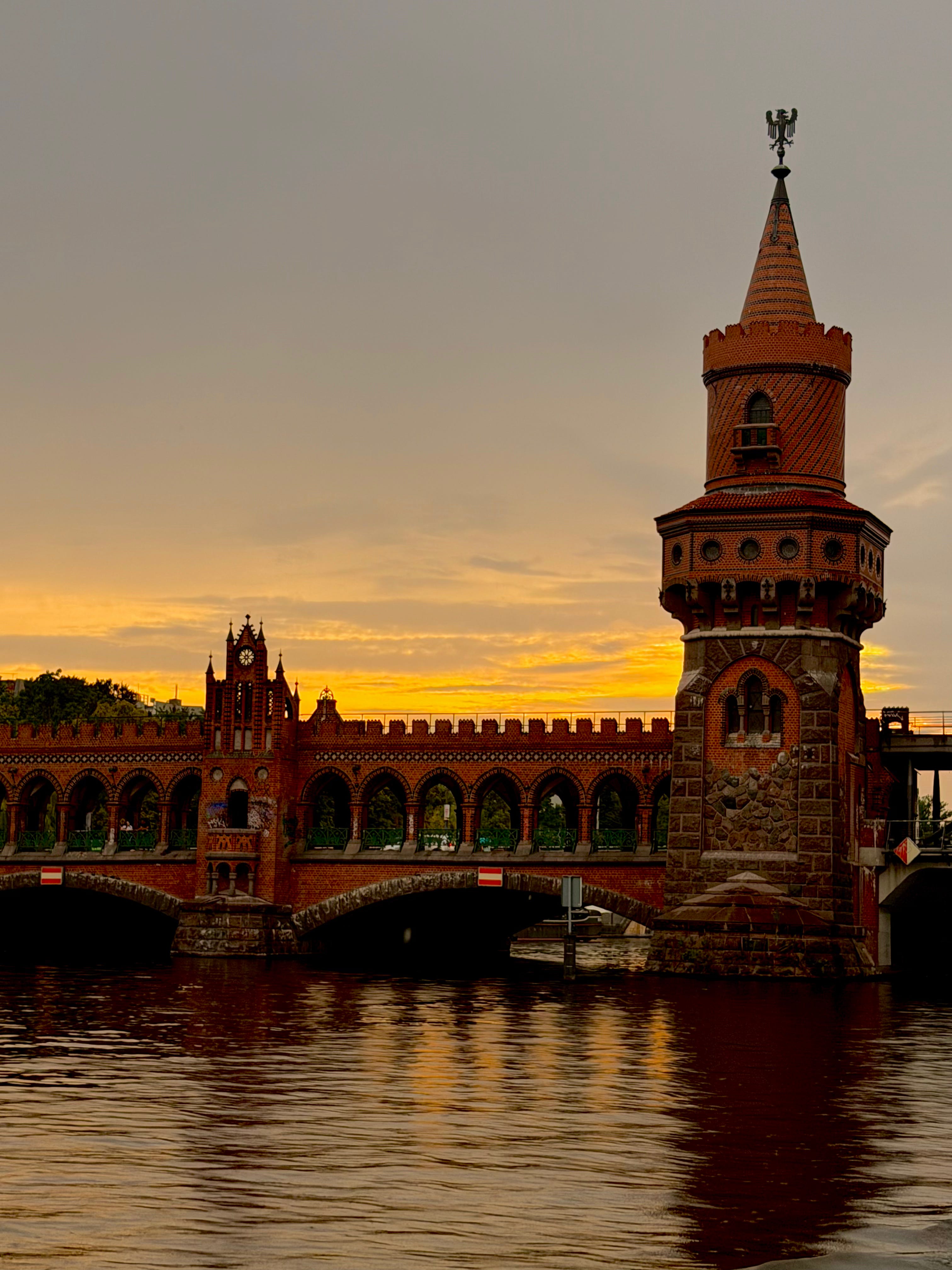
Along the river banks, people waved, danced, smoked cigarettes, and sat talking in groups. A thunderstorm rolled in. Even in the rain, some people kept dancing.
Coming back to the US, I feel a sense of sadness. In the past month, I’ve gone to multiple discussions and conferences centered on the “loneliness crisis” and the lack of 3rd spaces here in the US.
Here, so many spaces feel designed for transaction rather than lingering.
Social time is squeezed into narrow windows: a scheduled 30 minute coffee, an hour between meetings to power walk. Scheduling time with friends 6 weeks out. There are fewer moments where we can show up, hang out, and see what unfolds.
I’m not suggesting Berlin has escaped these patterns; I can’t claim to know what it’s really like to live there.
But I know that here in the US, something important is missing, and people feel it. The sense that our society has eroded something that we need like air: community, belonging, and spaces to just be.
It is telling that “human flourishing” has become something we now have to design for. We have made life faster, more measurable, and more convenient, while perhaps making it harder to fully inhabit.
AI risks deepening these patterns further. We talk about the risks of cognitive surrender to AI, handing over more and more of our thinking.
But what about the surrender of presence, intuition and bodily awareness?
As we check our Oura rings to find out how we slept (guilty) and ask AI what to say next, and how we should feel about this email from a friend that might be passive aggressive, the risk is deeper than cognitive.
As I drive home from the San Francisco airport beneath a skyline of AI billboards, I keep thinking about what we are building all this for. At its best, technology can help us create a richer life (Claude designed an incredible Berlin itinerary that I wouldn’t have been able to make myself).
If AI gives us more time and capacity, I hope we use these newfound powers to deepen joy, belonging, wonder, and our ability to be fully present in our own lives.
As a German native who has been living in Berlin for 10 years now, I have to disappoint you a bit: Life here is just as stressful as it is in any Western society and those people you saw dancing near the river were probably tourists too. Evenings out are just as rare if you‘re not a student anymore and you also don‘t have time to sit somewhere for hours or dance the weekend away at Berghain. The truth is (as for any tourist hotspot around the world): The life you see in the city center may be very different from the real experience of living there. But you have every right to do what we all do on vacation: Focus on the magic that you can only see when you’ve visited a place once or twice and enjoy not understanding the language, so you can’t hear what problems people are talking about.